
Before I had a baby, I thought I knew what would change.
I knew I’d be tired. I knew babies were expensive. I knew my sex life and relationship with my partner might look different. What I didn’t realize was how many tiny, everyday parts of my life would change, too.
Taking my time doing my nails. Rotting on the couch watching TikTok. Going to the gym whenever I felt like it. Eating a meal while it was still hot. Having a random Saturday afternoon with absolutely nothing planned.
When I tried to google what life would actually be like after having a baby, I found plenty about “communication” and “intimacy.” All important. But I wanted someone to talk about the little things—the parts of life that quietly shift when you become responsible for another human being.
So as both a couples therapist and a parent, here are some of the changes I’ve noticed most—both the challenges and the trade-offs that go with them.
Of course, everyone's experience of parenthood is different depending on their resources, relationships, community, finances, and so much more. But these are some common areas I see couples and individuals (and myself) adjusting to:
1.) Your Free Time
Rotting on the couch watching TikTok; taking your time doing your nails on the weekend; reading a book leisurely in the afternoon; etc. Free time changes when you become a parent–especially when you don’t have a village to help with much-needed breaks. And in your relationship, there may be less time for dates or checking in with each other. You may need to shift into having more intentional, scheduled moments to connect and bond. That’s not necessarily a bad thing, but it is different from being able to connect spontaneously whenever you wanted.
The Trade-off: Free time becomes play time and family time! And sometimes you’ll miss rotting on the couch watching TikToks together, but other times you’ll be watching this baby you gave life to laughing at your silly faces. It’s quite the trade-off.

2.) Sex, Passion, and Romance
Babies and kids are the ultimate cockblocks. (Never thought I’d say that sentence lol.) And for multiple reasons—they’re around more, they take up your energy, and they can make it harder for our brains and bodies to shift into a sexual state. Basically, they rev up our brakes and turn off our accelerators.
The Trade-off: You’re on a precipice. Your sex life may change for the better or the worse. There will be lulls, and that’s normal and okay. So you may be forced to improve communication, try something novel, get creative with time/effort, etc., or find yourself struggling with the adjustment.
3.) Sleep, Eating, and Exercise/Movement
These are all different, but I grouped them together as a “taking care of your body” category. Keeping a baby/kid alive and well takes so much attention that we can forget to keep ourselves alive and well, too. Sleep, eating, and movement are often some of the first things to go when we’re stretched thin.
The Trade-off: It gets better as they age and/or with help. There may come a point when the baby sleeps through the night and the children learn to feed themselves. Even a point where they can join you for your jog or stay home alone while you go to the gym! Or, with the help of a partner, family member, or community, you can spend more time coming up for air every now and then.
4.) Finances
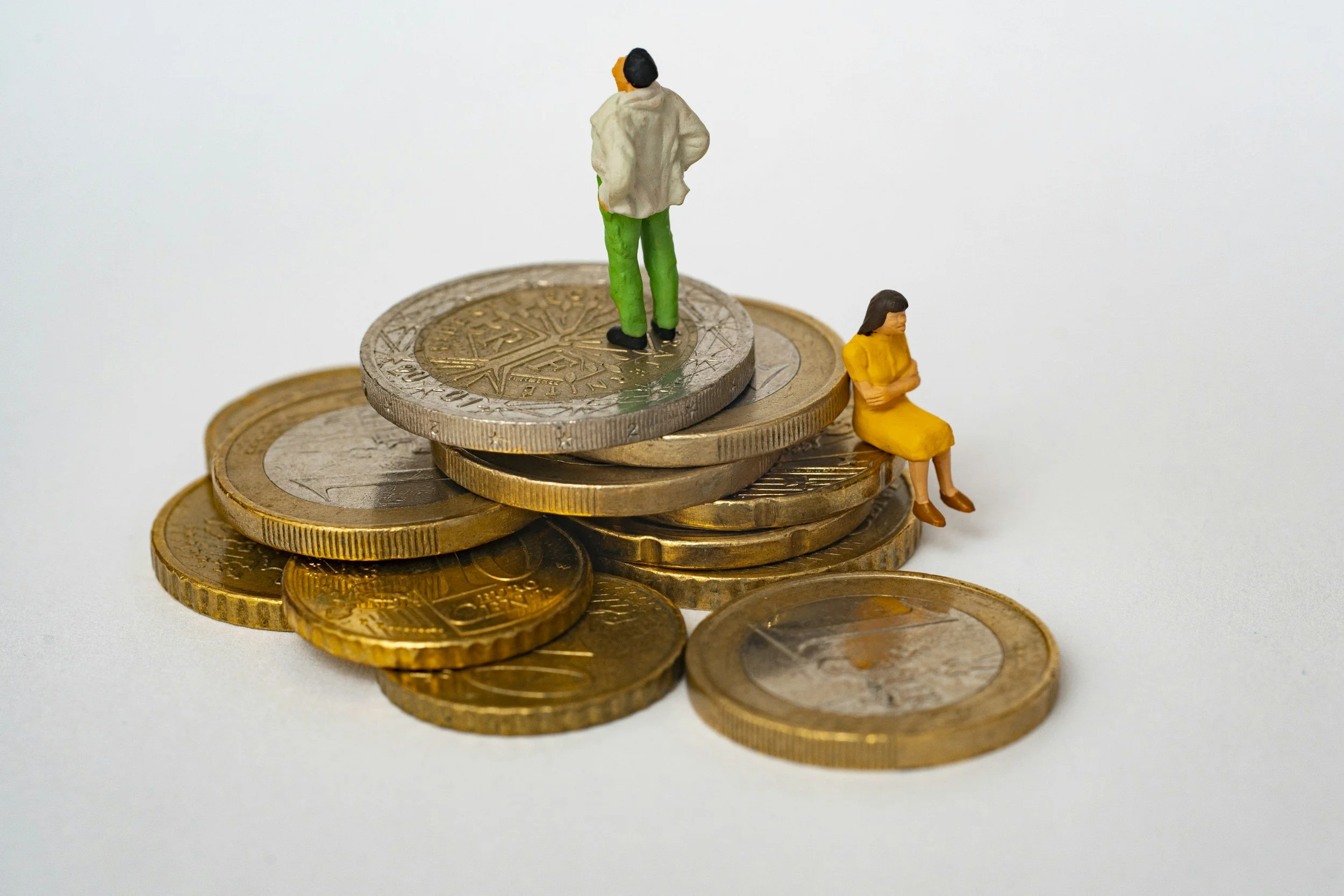
The obvious answer is that babies/kids cost money. Daycare, clothes, diapers, formula, toys, etc. But the bigger piece is the long-term change to our finances. We are adding whole people to our financial equations. And that changes our money situation for life (or only 18 years if you’re one of those parents).
The Trade-off: Your “why.”
Having a child can force us to get really clear about why we wanted to become parents in the first place. When the financial sacrifices feel really big, remembering the reason we chose this life can help put those sacrifices into perspective.
This is why our “whys” are so important. Why are we having a child? Maybe it’s for the joy of having a baby/child in our lives. Maybe it’s to have the opportunity to raise a child differently than we were raised. I don’t know what your “why” is, but being really clear on this can help us cope with the financial changes that come with a child.

5.) Mental Health
Our mental health can be impacted for many different reasons: postnatal issues, adjusting to life changes, stress and anxiety of caretaking, rising conflict, hormone imbalances, etc. And we may not always have the time or resources to address it.
Women, men, people of any gender all have a likelihood of struggling with their mental health after having a child. But birthing partners will have the added challenge of their body adjusting in the prenatal and postpartum experience.
The Trade-off: There is no trade-off. This one is rough.
I’ll be honest with you, this one doesn’t have much room for “recognizing the positives.” However, it doesn’t mean it’s hopeless. Much like with #3, this has the potential to get better with time, effort, and community support. But it will take dedication and intentionality to address.
6.) Division of Labor
Imagine in high school or college when you had to work on a group project with other people and you had to coordinate times to meet, divide responsibilities, communicate, and come together for a common goal. It probably sucked lol.
Sharing a child with someone is like one of those big team projects (if your powerpoint presentation threw up and pooped itself). But unlike a school group project, you can’t just drop the class or avoid the person you’re working with. And there are much higher stakes. It’s bound to bring up feelings and conflict in your relationship.
The Trade-off: It can strengthen your ability to work together, communicate, resolve conflict, and divide responsibilities. You will be forced to figure it out or keep struggling with it.
7.) Relationship Dynamics

Your relationships may change after having a kid: romantic, friendships, family, etc. Sometimes for the worse, and sometimes for the better. You may find yourself drifting away from some people, becoming closer to others, or realizing who is really part of your “village.” But I believe if one is intentional about maintaining connections (and if they reciprocate), relationships can still flourish.
The Trade-off: Your relationships may really show up for you. Having kids is hard, and if the people around you start being the village that shows up, it can really make you feel loved. And between you and your romantic partner, strong relationship skills can help y’all get through that hardship.
The Bottom Line
Having a kid changes a lot. Some of these changes are hard, some are surprising, and some are honestly pretty great. And I think the biggest thing to remember is that there isn’t one “right” way to experience these changes. Your life, your resources, your relationships, your kid, and your community are all going to be different.
But if we can go into parenthood knowing that your life will change (and being intentional about how you want to respond to those changes), you give yourself a much better chance at adjusting to your new life rather than constantly wishing for your old one back. And as both a therapist and a parent, I think that’s the part we don’t talk about enough.
I hope this list was helpful in considering different ways your life changes after having a baby. If you’re considering growing your family or are decided you don’t want kids and want to explore the reasons why, therapy may be a good place to explore it. Reach out to us here.
We offer individual and couples therapy in Austin, TX. Interested in services? Contact us here.
