
Therapy Book Club: Intuitive Eating - A Revolutionary Anti-Diet Approach
This book has shook me to the cooooore!
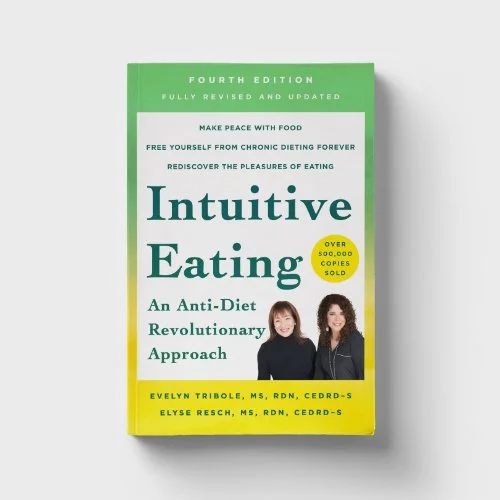
I read this book for both professional and personal reasons. This book has come highly recommended by other therapists who believe this approach of “intuitive eating” is helpful for people who want to heal their dysfunctional relationships with food and their bodies. What they didn’t say was that this book would throw so many parts of my life into a defining existential crisis of my 30’s.
Okay, I’m being a bit melodramatic but the existential crises were real! To be a bit personal and self-disclose: I didn’t have the best relationship with food. I used to think about my food choices and body image so much! And I didn’t like that. I wanted to be one of those people who felt casual about food and didn’t cycle through multiple attempts at dieting and weight loss and then weight gain.
A Favorite Amongst Therapists
As a therapist, I had always heard about intuitive eating being an approach therapists recommend to their clients (with the guidance of a dietitian) who struggle in their relationship with food; with body image issues; and/or eating disorders. I didn’t have a reason for a personal deep dive until the last couple of years–when I finally became fed up (ha ha) with how much I obsessed over weight loss. And so many of us do–it’s part of our culture!
This book/approach is highly recommended for those who are tired of diet culture, the yo-yo experience of dieting, weight loss, and weight gain. Those who are tired obsessing over their food choices, calories, macros, etc. And with the intuitive eating approach, the focus instead becomes your body’s experience, your inner thoughts/feelings, your intuition, and your overall wellbeing.
The intuitive eating approach was developed by Dietitians Evelyn Tribole and Elyse Resch is not a diet—it’s the opposite. It’s a “sustainable, non-diet approach focused on overall well-being, not weight loss.” It’s a lifestyle approach that centers the development of a healthy relationship with food and your body. And boy does it ever. This approach centers its work around 10 principles.
10 principles of the Intuitive Eating approach:
1: Reject Diet Culture

2: Honor Your Hunger
3: Make Peace with Food
4: Discover the Satisfaction Factor
5: Feel Your Fullness
6: Challenge the Food Police
7: Cope with Your Emotions with Kindness
8: Respect Your Body
9: Movement—Feel the Difference
10: Honor Your Health—Gentle Nutrition
The book has a chapter on each of these principles. Each chapter was so interesting to me though I recognized some were more relevant to me than others. You may find yourself recognizing that you struggle with some areas vs. feeling aligned in others. For example, I had a harder time with rejecting diet culture in #1 than I did with #9. But you’re welcome to read the chapters in any order with the exception of #10. More is explained in the book on why.
In Conclusion
This was such a great book and has quickly become one of those “in my top 10 must reads of all time.” This book has truly changed the way I approach food, exercise/movement, the clothes I wear, how I view weight loss/gain, etc. I think this book is most helpful for anyone who is tired of their relationship with food and their body and wanting more peace in that relationship.
Have you read this book? Feel free to share what you thought or how you felt about it! I’d love to hear what others think of it and how it’s impacted their journey.
At Belonging Counseling, we offer individual and couples therapy in Austin, TX. Interested in services? Contact us here.
